

Writing
Writing gives children a voice.” — Malorie Blackman
At WHPS we have developed our own bespoke program to support the teaching of writing.
We are proud of our bespoke writing curriculum, designed to inspire children to become confident, capable writers. We believe the best writing begins with high-quality texts that capture children’s imagination, develop vocabulary and show them what great writing looks like.
We carefully choose a wide range of books — including texts that children may not naturally discover for themselves — so that pupils experience exciting stories, rich language and a variety of writing styles. This approach helps to broaden horizons, raise expectations and build a genuine love of reading and writing.
Our writing curriculum is informed by the DfE Writing Framework (2025) and is carefully sequenced to develop both essential components of writing: transcription (handwriting and spelling) and composition (vocabulary, grammar, cohesion and authorial intent). We explicitly teach spelling patterns, key spelling rules and handwriting so that pupils can write fluently and accurately.
High-quality texts underpin our writing curriculum, enabling pupils to internalise effective sentence structures, broaden vocabulary and develop knowledge of different genres. Teaching is rooted in talk and oral rehearsal, with pupils regularly discussing, rehearsing and refining ideas before writing. Teachers provide clear modelling and guided practice, supporting pupils to make effective authorial choices.
Pupils are taught writing as a process, with planned opportunities to plan, draft, revise and edit their work. This ensures writing outcomes are purposeful, ambitious and matched to audience and intent, and that pupils develop the independence and stamina needed for secondary school and beyond.
Our curriculum is also informed by Doug Lemov’s work on reading. In particular, we ensure children experience texts that include the five “plagues” (challenges) that strong readers need in order to build confidence and access more complex literature. These include:
-
Archaic language (older or unfamiliar vocabulary)
-
Non-linear time sequences (stories that move backwards and forwards in time)
-
Narratively complex stories (multiple plot strands or viewpoints)
-
Figurative and symbolic texts (where meaning is not always literal)
-
Resistant texts (texts that require effort, rereading and deep thinking)
We believe these carefully chosen reading experiences help children move beyond simply decoding words, towards true comprehension and meaning-making — preparing pupils well for secondary school and beyond.
A key part of our approach is giving children opportunities to learn from real authors. Where possible, we use texts by writers that pupils can meet in person, helping them to see that authors are real people and that writing is something they can aspire to.
Writers we use include Sam Scott, Chris Connaughton, and our own Mr Davies.
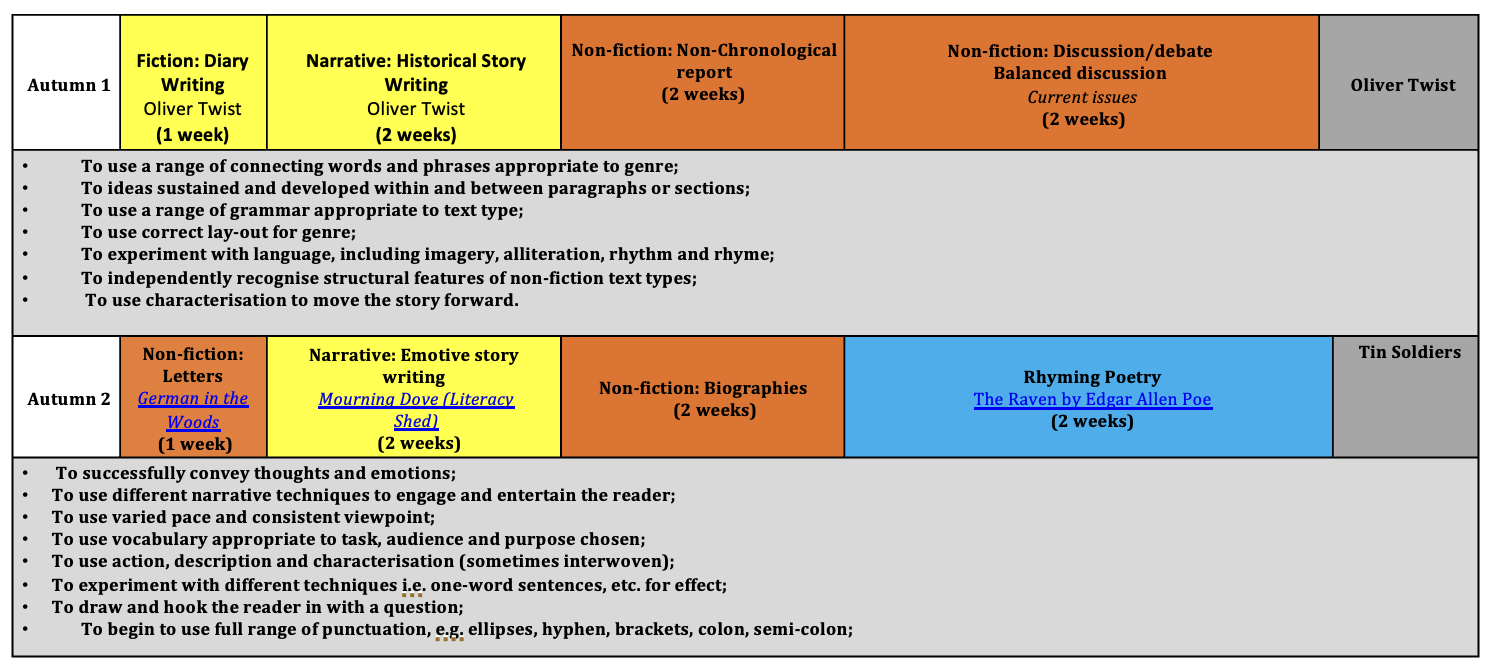
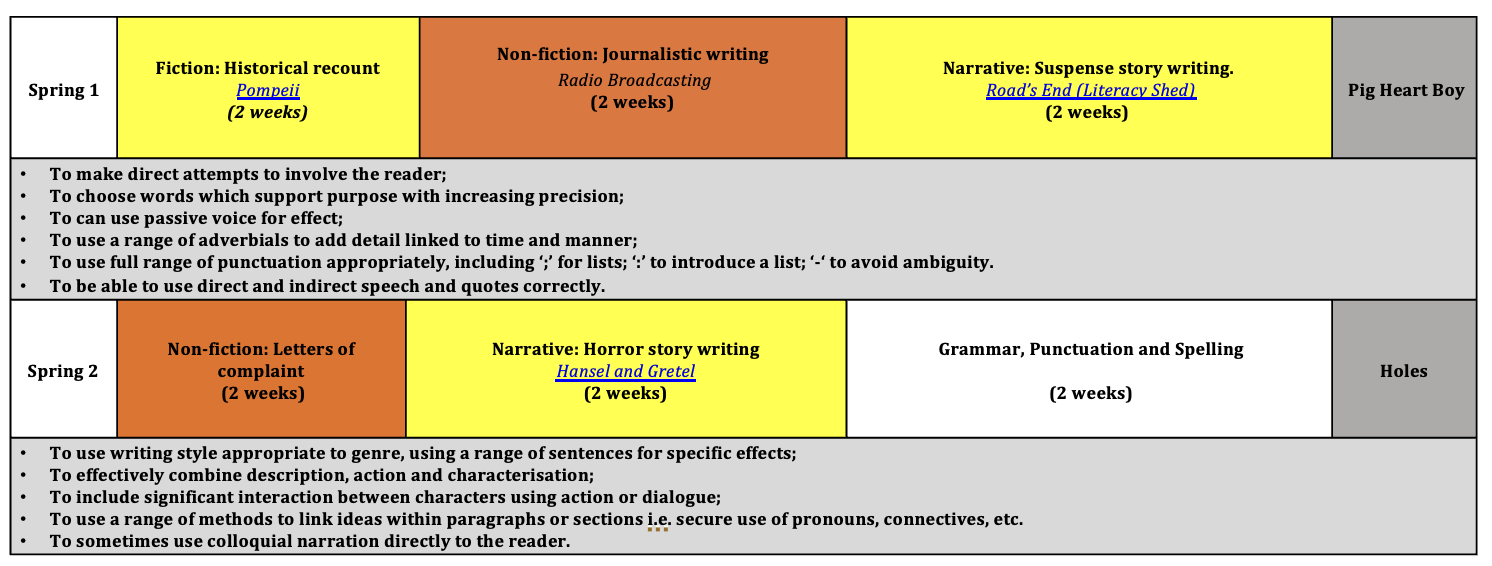
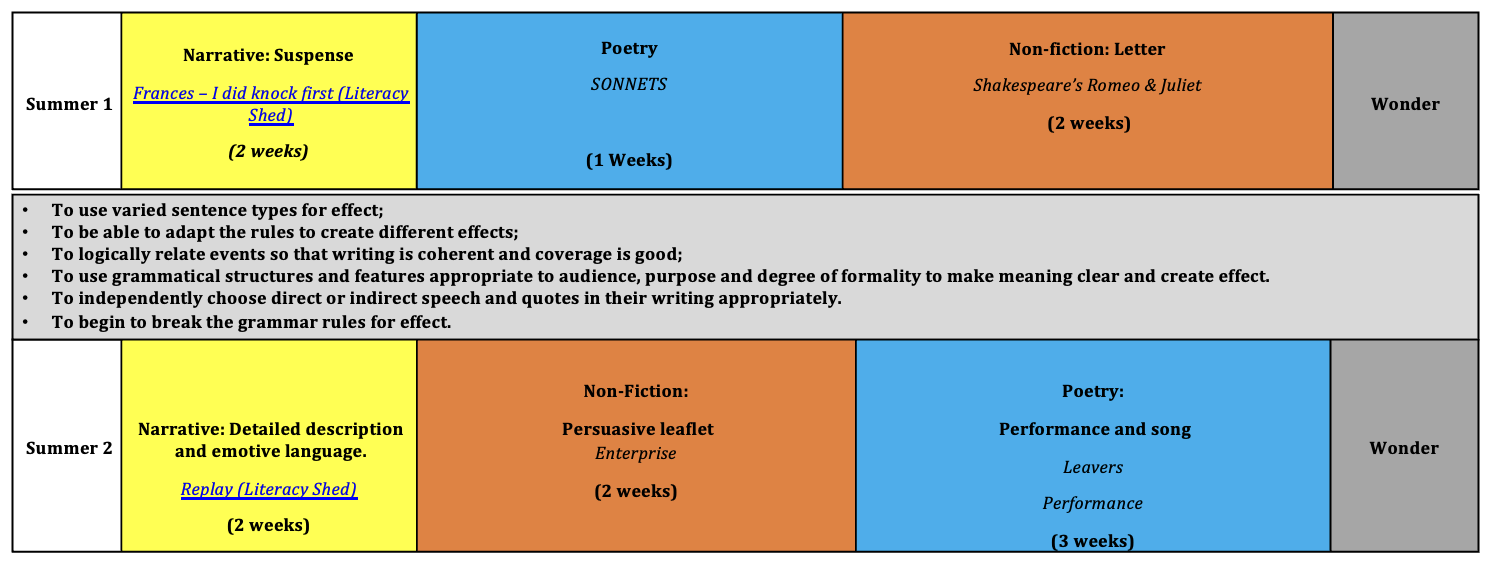
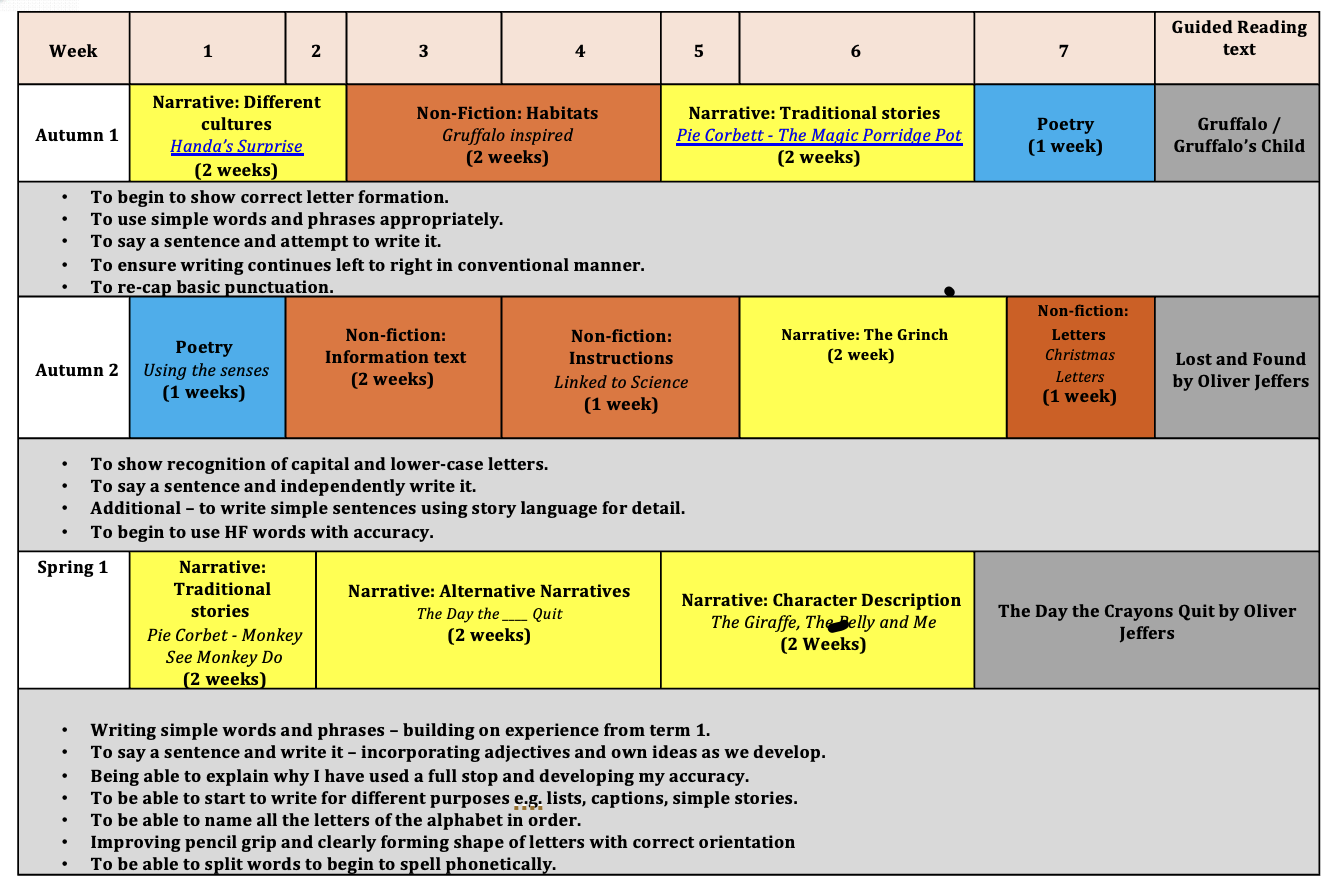
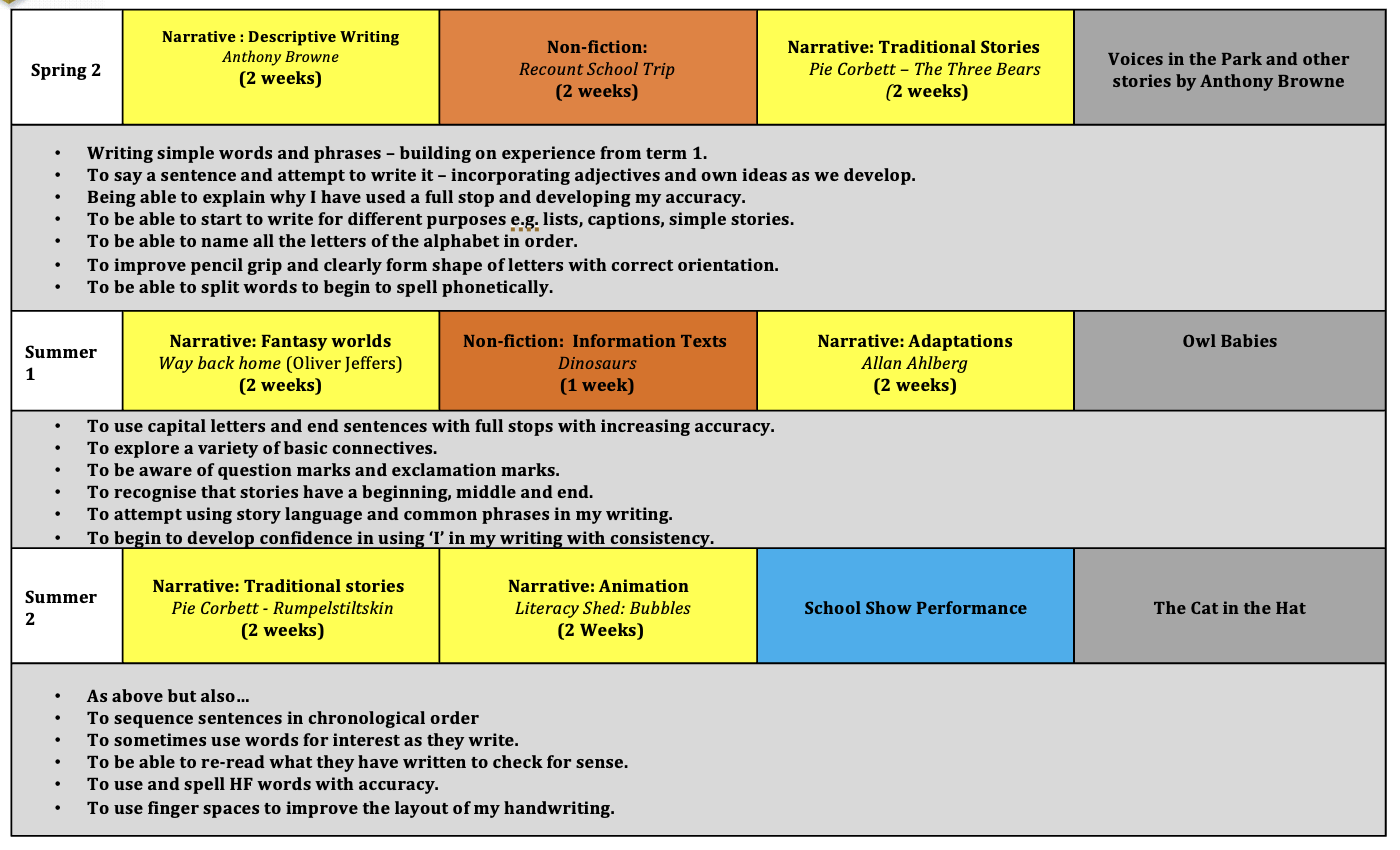
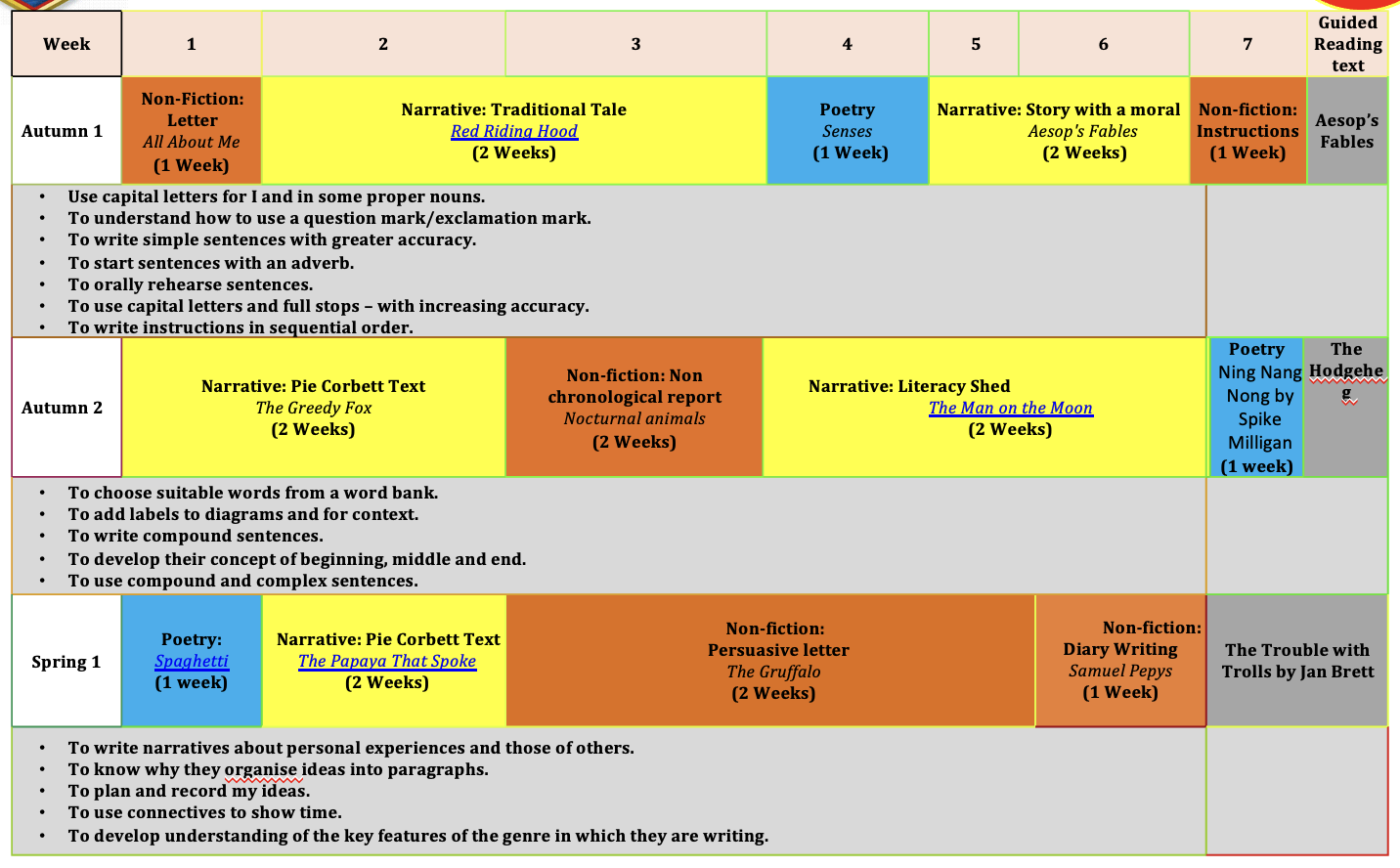
Writing sequence
Year 1
Year 2
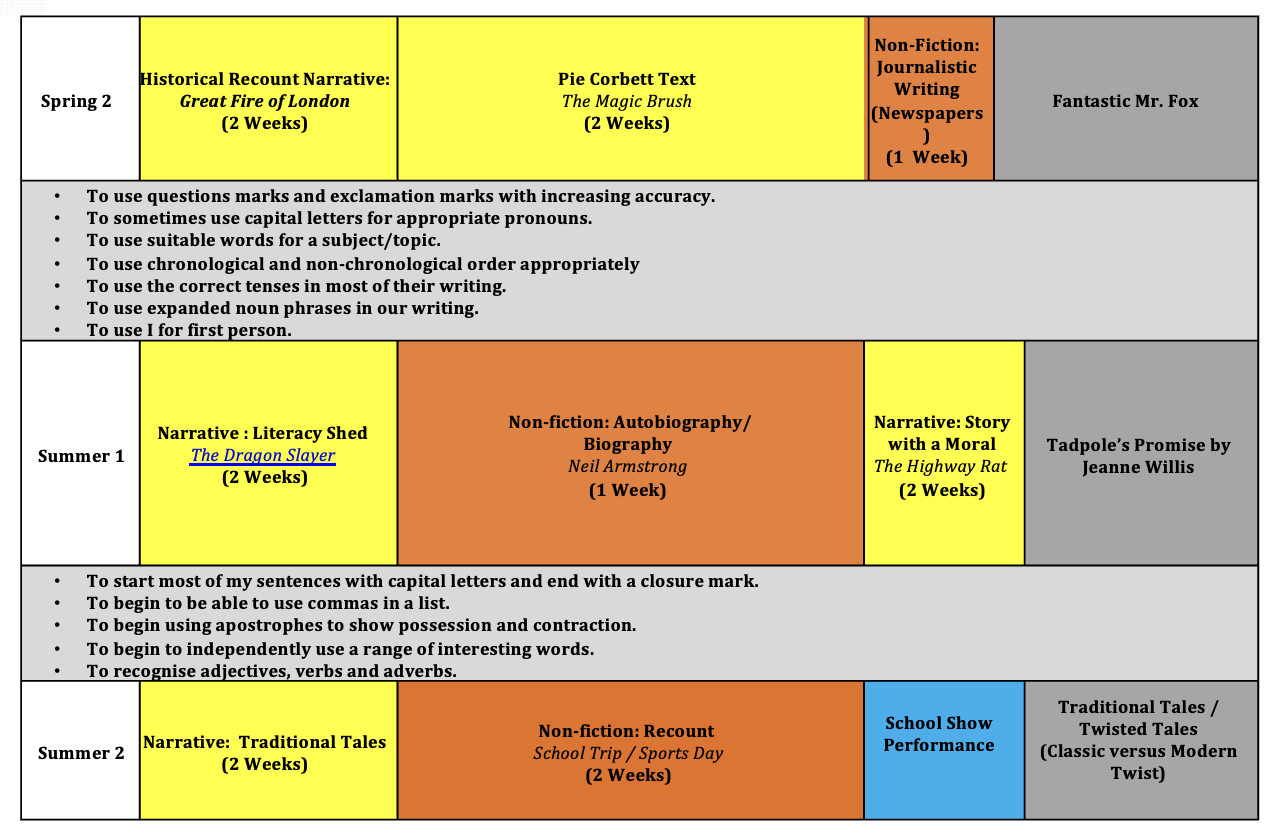
Year 3
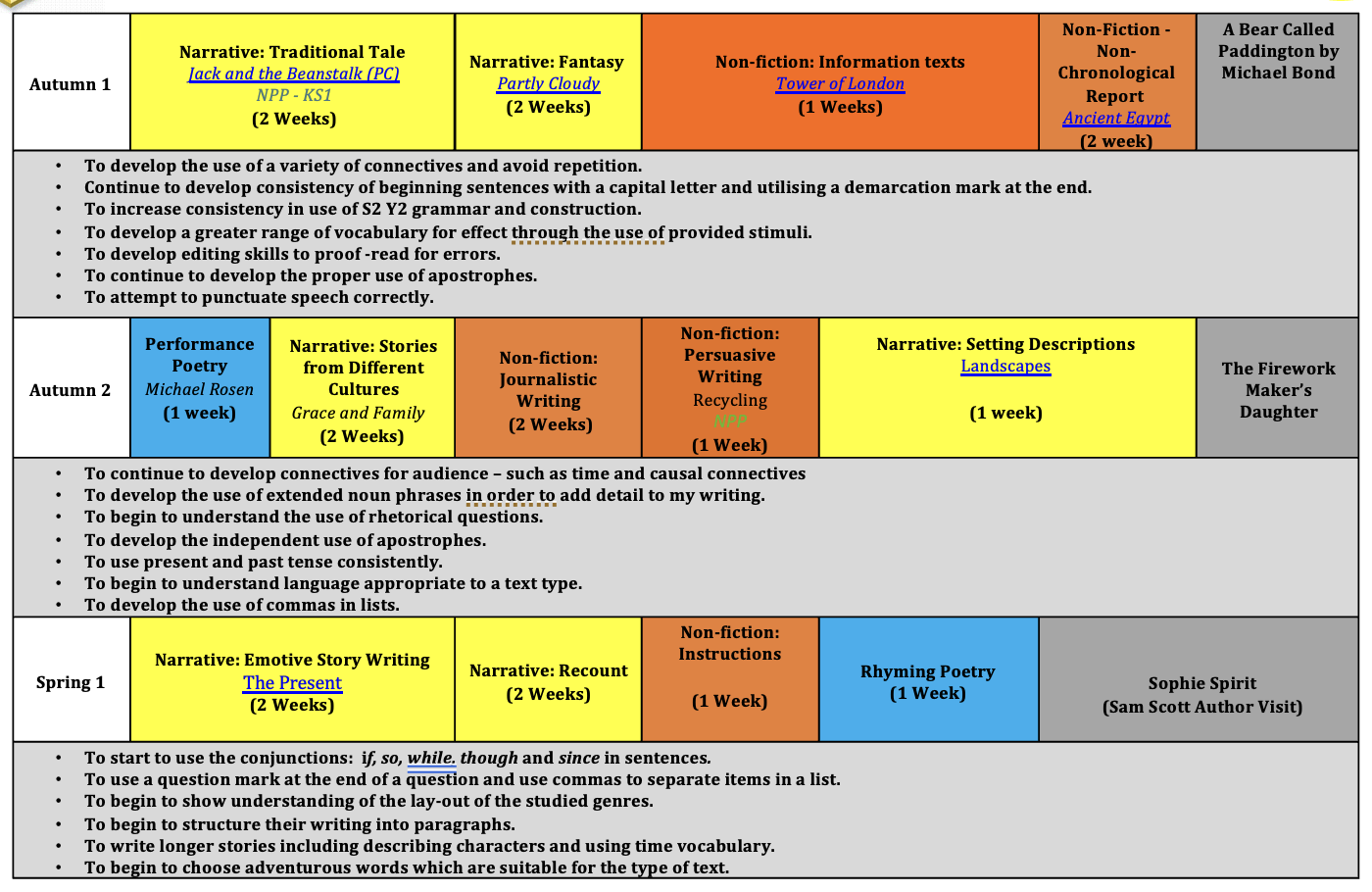
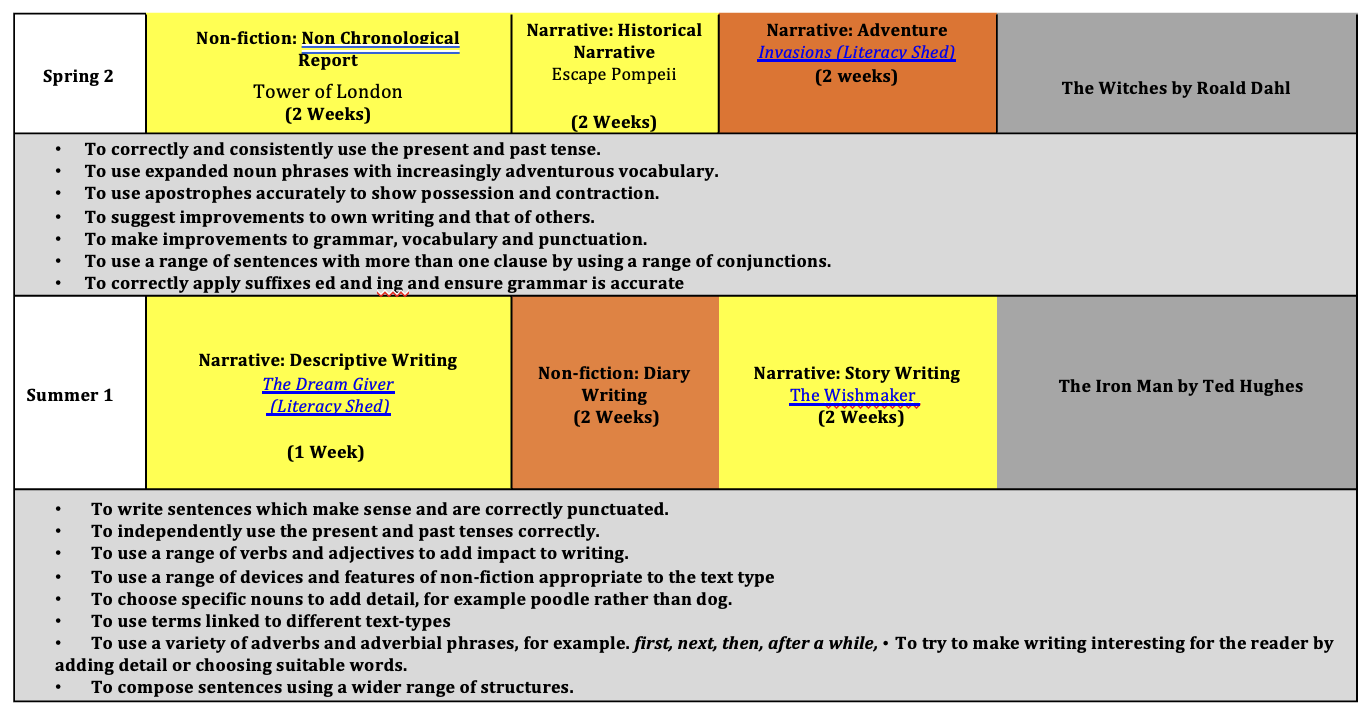
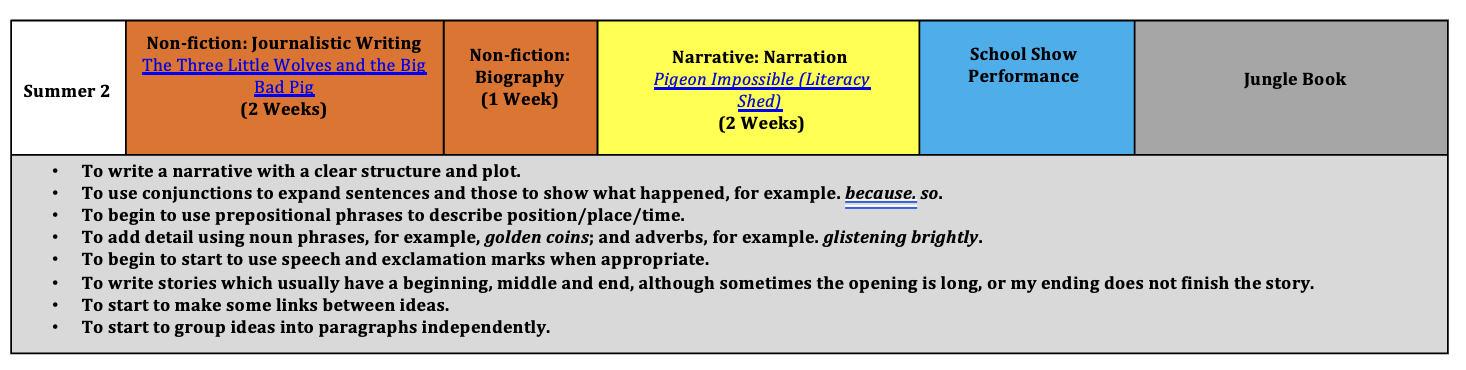
Year 4
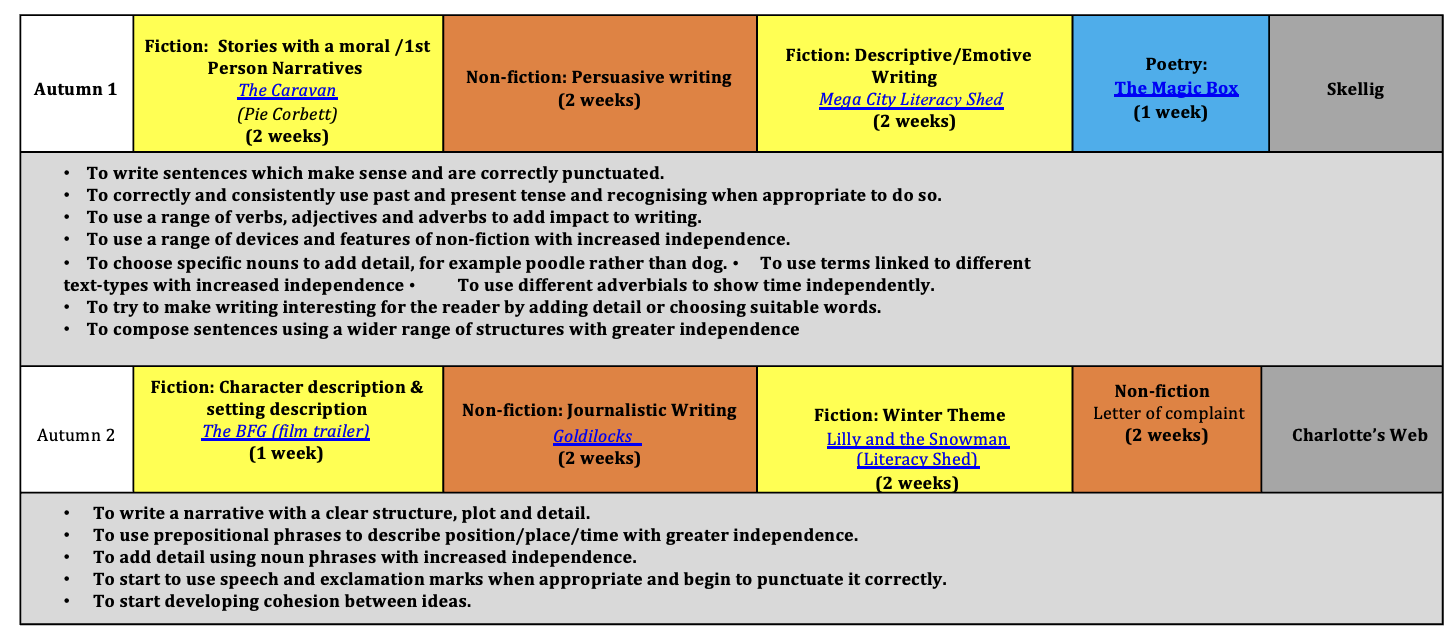
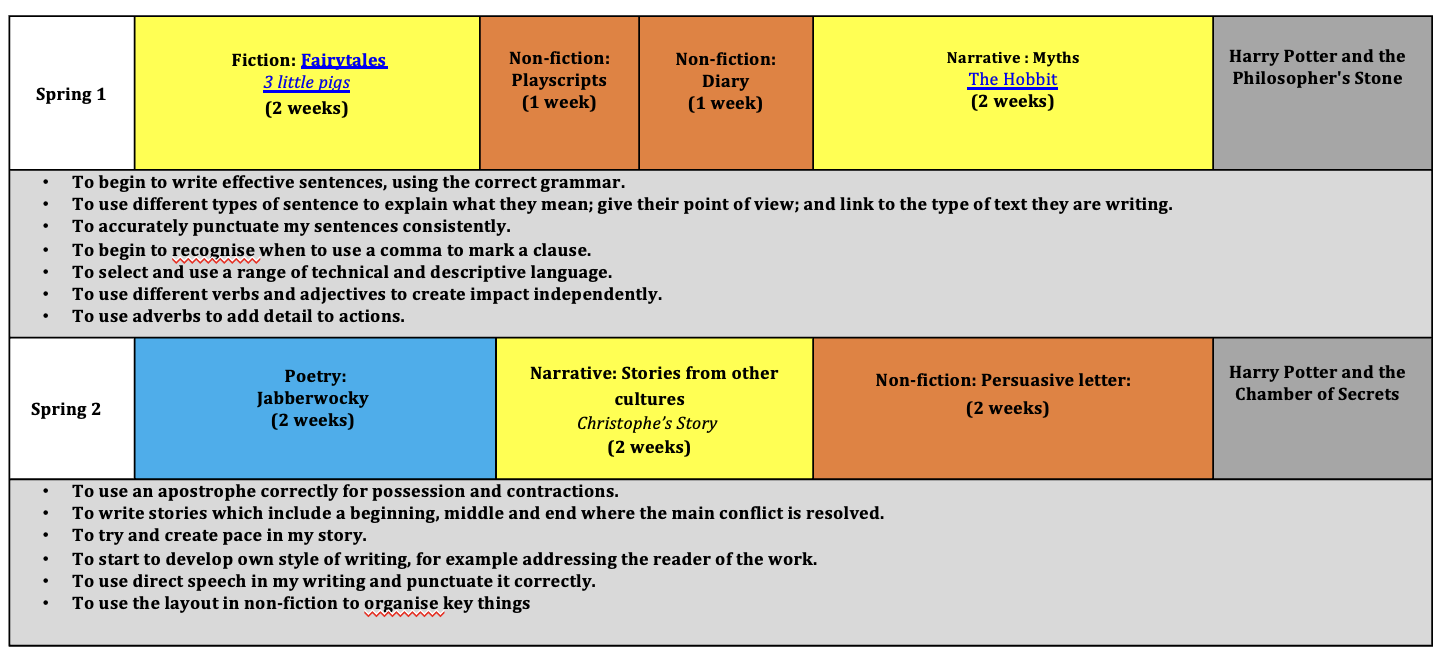
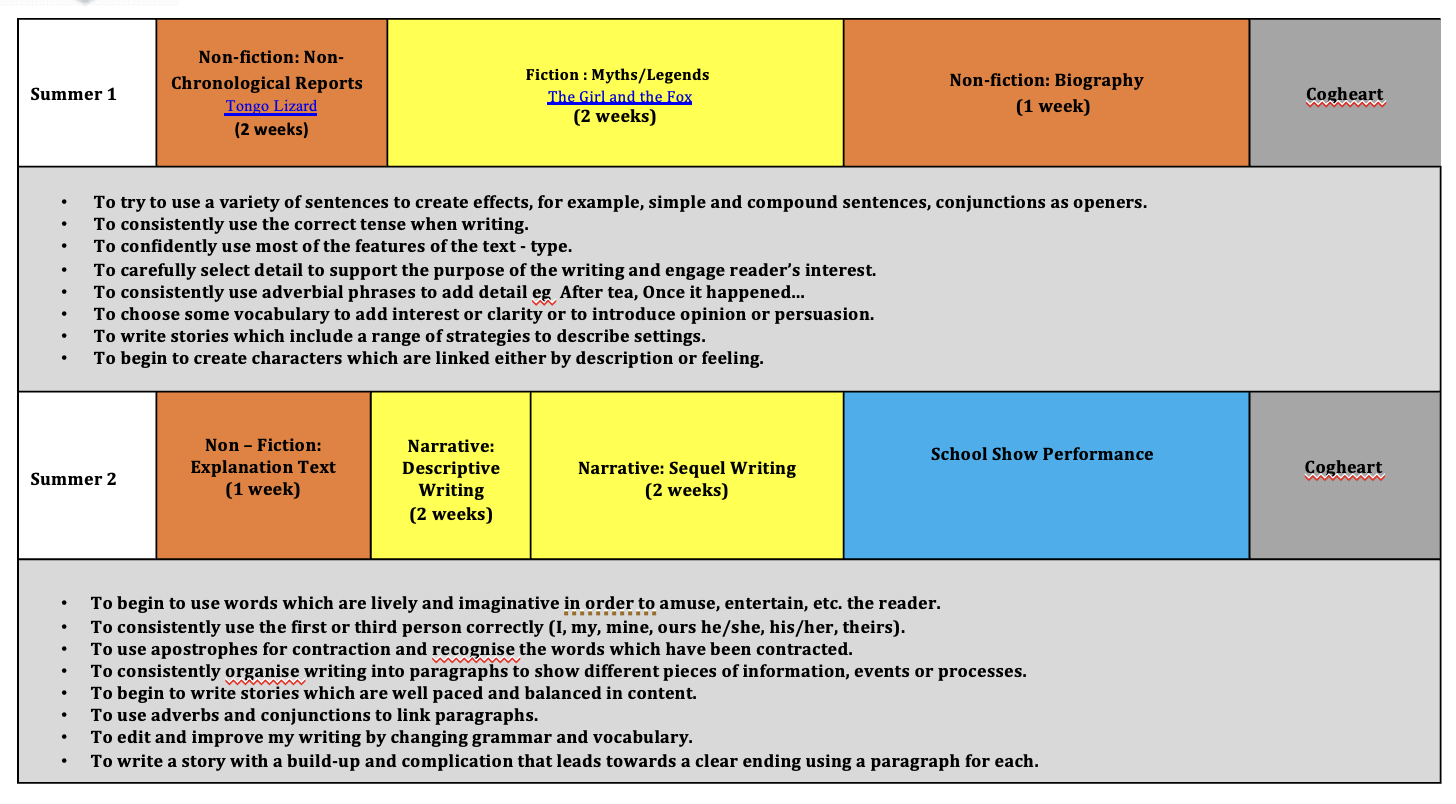
Year 5
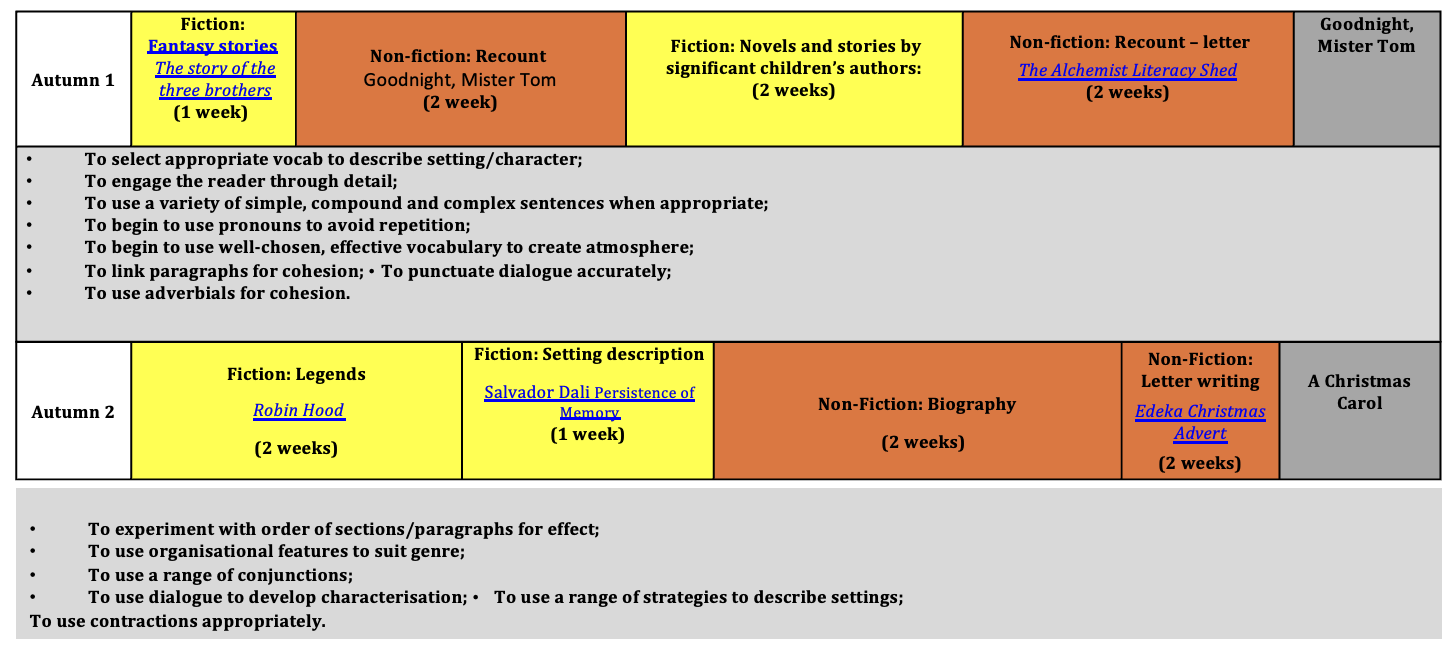
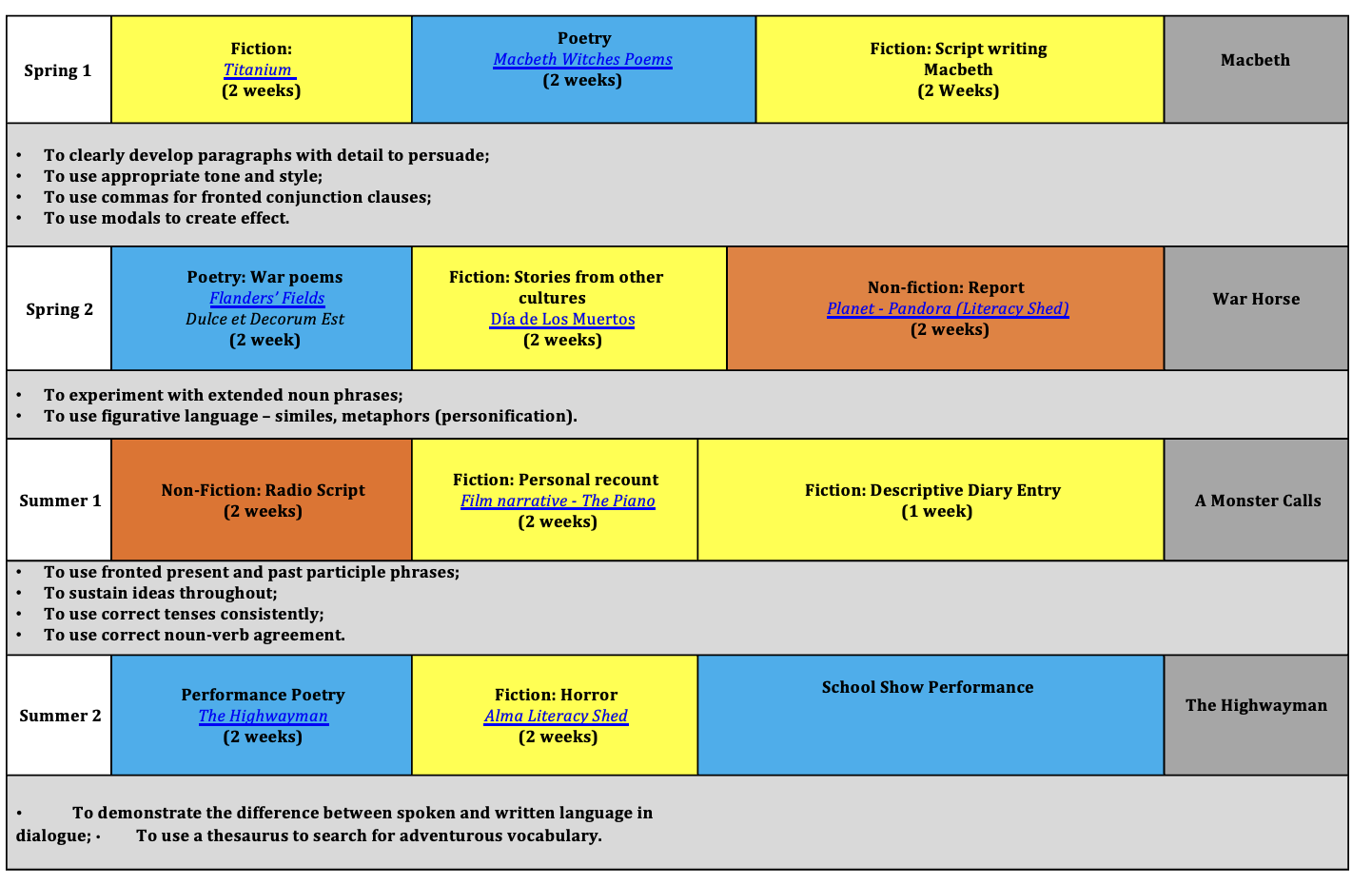
Year 6