

Computing
“Digital confidence is life confidence.” — Tim Berners-Lee

At WHPS we use the Purple Mash program to support our teaching of Computing
At WHPS we recognise that Computing is an essential life skill and a key part of preparing children for the modern world. Our Computing curriculum is designed to help pupils become confident, capable and responsible users of technology, while developing their creativity, problem-solving skills and understanding of how digital systems work.
We teach Computing through the Purple Mash scheme of work, which provides a structured, progressive curriculum that builds year-on-year across the three key areas of the National Curriculum: Computer Science, Information Technology and Digital Literacy.
Intent
Our Computing curriculum aims to ensure pupils:
-
Develop computational thinking skills such as logical reasoning, problem-solving and creativity
-
Learn how to write and debug programs, starting with simple block coding and building toward more advanced concepts
-
Use technology purposefully to create, organise, store, manipulate and retrieve digital content
-
Become digitally literate, understanding how to communicate safely and responsibly online
-
Develop confidence and independence in using technology across the curriculum and in real-life contexts
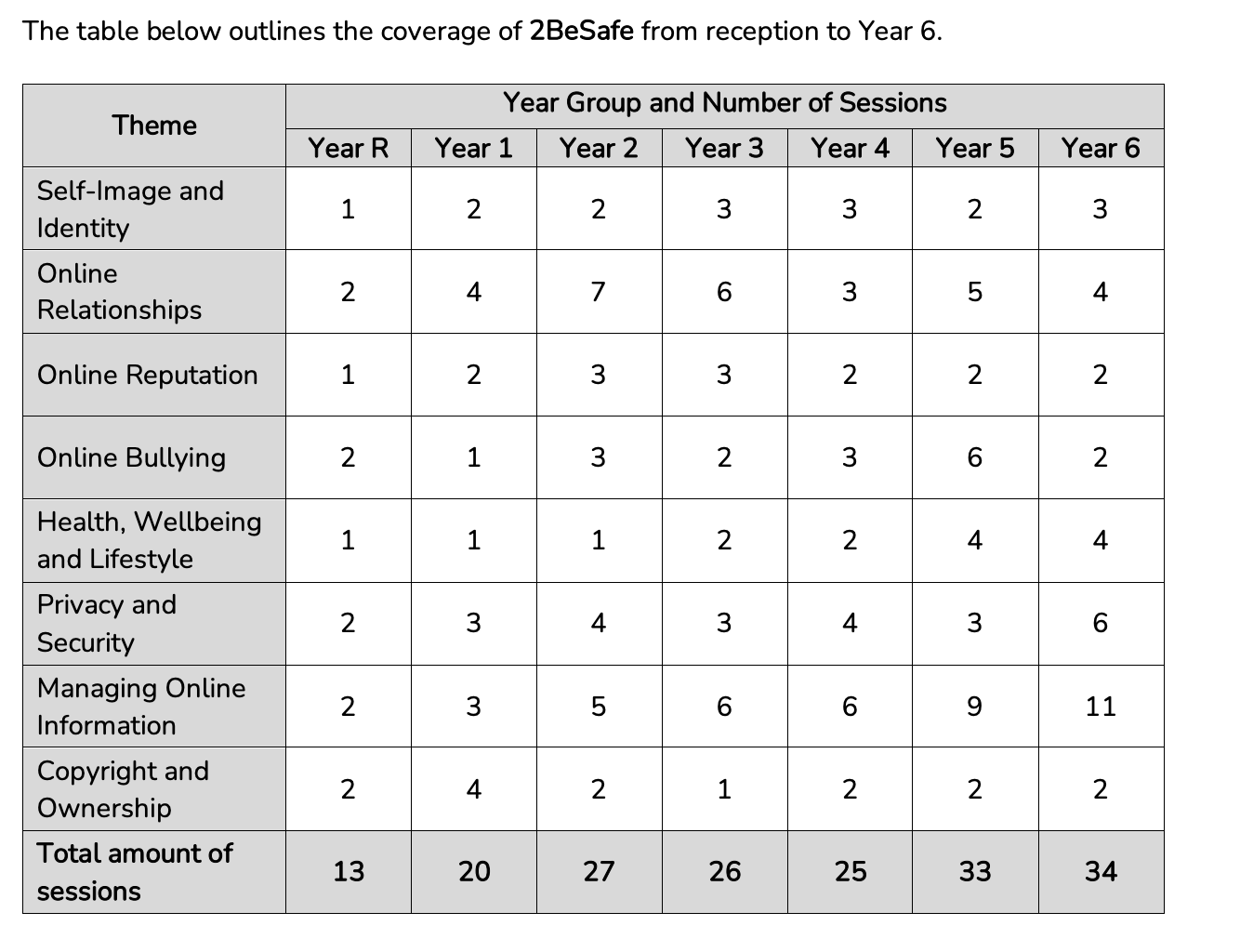
Online safety is central to everything we do in Computing. Pupils learn how to stay safe, respectful and responsible online through regular teaching and revisiting key messages throughout the year using 2BeSafe.
Implementation
Computing is taught through a carefully sequenced set of units from Year 1 to Year 6. Purple Mash supports progression by revisiting key skills and building complexity as pupils move through the school. Units are designed to be practical and engaging, enabling pupils to learn through exploration, creativity and purposeful outcomes.
Across the school, pupils develop skills in:
Computer Science
Children begin with block coding and sequencing using tools such as 2Code and 2Go, learning about algorithms, debugging, repetition, variables and selection. Older pupils extend their understanding through units such as micro:bit, Logo, Binary, and an introduction to Python.
Information Technology
Pupils use technology to create meaningful work through units such as digital art, presentations, animation, word processing, spreadsheets, databases, graphing, blogging and 3D modelling. They learn to communicate information clearly and evaluate their own digital outcomes.
Digital Literacy
Pupils learn how to use technology safely and effectively, including understanding the internet, email communication, networks, effective searching and the responsible use of digital information. This helps pupils become thoughtful and informed digital citizens.
Purple Mash also provides opportunities for pupils to apply their computing learning across the wider curriculum by supporting research, creative writing, presentations, digital publishing and collaborative projects.
Impact
By the time pupils leave our school, they will:
-
Be confident in using technology for a range of purposes and audiences
-
Understand how digital systems work and how to solve problems using code
-
Be able to create and evaluate a range of digital content
-
Use the internet safely, responsibly and respectfully
-
Be prepared for the next stage of learning and life in an increasingly digital world
Through Purple Mash, pupils build secure skills in computing, creativity and online safety, ensuring they are well-equipped for secondary school and the wider digital future.